We are developing separate courses for individual agent platforms and for specific types of work, such as research, content production and small business operations. Each proposed course includes six modules and a final practical project. The planned price is £99 per course; enrolment is not yet available.
PROPOSED COURSE / £99 PLANNED PRICEAlways-On Agents: Foundations
People who want help with tasks they do regularly at work or in their business.
See what the six modules will cover
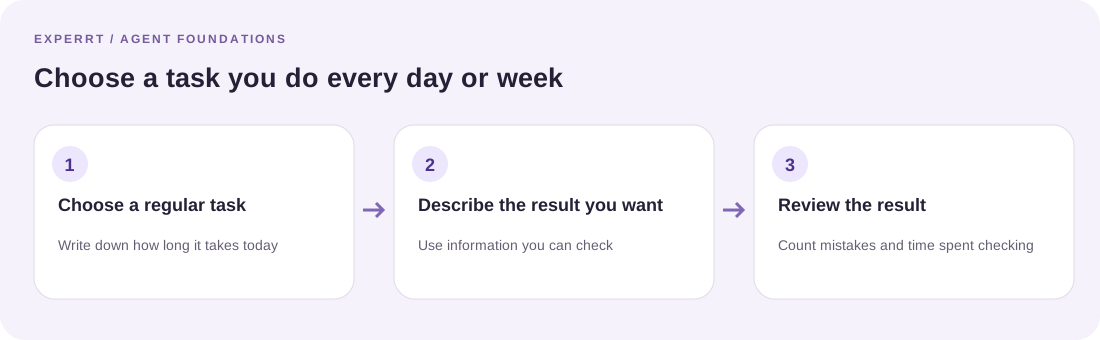
- Choose a task you do every day or week
What you will produce: A list of possible tasks and a record of how long they take today
- Write clear instructions for your agent
What you will produce: Written instructions and two examples showing what a correct result looks like
- Choose what your agent can see and do
What you will produce: A list of information the agent can use and actions it is allowed to take
- Set a schedule and check the results
What you will produce: A schedule and a checked result showing which records you used
- Fix problems and keep costs under control
What you will produce: A practice problem, a check for repeated work and a cost worksheet
- Show how your task works and explain it to someone else
What you will produce: Your finished project, the records of your checks and a discussion with a reviewer
Before you start: Basic file and browser skills. Practice can use the supplied fictional scenario.
Your final projectSet up a task that prepares a weekly project report. Write its instructions, check the results, practise fixing a problem, track the costs and explain how someone else can run it.
PROPOSED COURSE / £99 PLANNED PRICEWorking with OpenAI Dots
People who want to delegate ongoing research, reporting or project responsibilities in ChatGPT.
See what the six modules will cover
- Get to know your dot and where it works
What you will produce: Access and environment checklist with cloud/local dependencies
- Give your dot a task to keep working on
What you will produce: Dot instructions with checks for a correct result and stop rules
- Connect your apps and choose what your dot can do
What you will produce: Tested app access and Custom Rules record
- Check the work and give your dot better information
What you will produce: Annotated outputs and a corrected follow-up run
- Pause your dot and deal with problems
What you will produce: Missing-source and conflicting-instruction drills
- Show how your dot helps with a real task
What you will produce: Run history, source verification and project explanation
Before you start: Eligible Dots access in a supported region, plus the foundation refresher.
Your final projectConfigure and evaluate a dot that maintains a project briefing, flags meaningful changes and prepares reviewable updates.
PROPOSED COURSE / £99 PLANNED PRICEWorking with Grok Bot
Professionals evaluating ongoing agent work using Grok Bot.
See what the six modules will cover
- Check what your bot can do
What you will produce: A verified record of available features and running requirements
- Give your bot a clear task
What you will produce: Instructions, tasks to leave out and examples of correct results
- Choose the information and actions your bot can use
What you will produce: Source map and integration access record
- Check the findings and decide when you need an alert
What you will produce: Claim-by-claim verification and alert relevance log
- Deal with old information and unfinished work
What you will produce: Practice recovery exercise and intervention record
- Compare your bot’s work with how you did the task before
What you will produce: Final project, cost comparison and individual follow-up
Before you start: Eligible Grok Bot access and verified availability of the integrations used in the course.
Your final projectBuild and evaluate a monitoring and briefing workflow with references that support its findings with clearly scoped actions and a recovery plan.
PROPOSED COURSE / £99 PLANNED PRICEWorking with Meta Muse
People delegating personal planning and administrative work.
See what the six modules will cover
- Set up Muse and choose something you need help with
What you will produce: A clearly scoped goal and verified access checklist
- Tell Muse what it needs to know and remember
What you will produce: List of useful information and a demonstrated correction or forgetting action
- Choose what Muse can do and when it must ask you
What you will produce: Personal app permissions and action decision table
- Make a plan that fits your week
What you will produce: A checked plan based on fictional constraints
- Update the plan when your needs change
What you will produce: Changed-goal and conflicting-calendar drills
- Show how Muse helps you stay organised
What you will produce: Plan comparison, review record and project explanation
Before you start: Eligible Muse access; fictional calendar and message examples are supplied.
Your final projectCreate a personal planning workflow that proposes a weekly plan, resolves conflicts and leaves actions that affect other people or records for approval.
PROPOSED COURSE / £99 PLANNED PRICEWorking with Claude Cowork
Office professionals automating recurring file and reporting work.
See what the six modules will cover
- Set up your files and check how Cowork runs
What you will produce: Working folder, access boundaries and verified local or remote execution requirements
- Ask Cowork to help with a task at work
What you will produce: A task brief and accepted sample result
- Save useful instructions and connect the tools you need
What you will produce: A reusable skill or saved instructions and tool test
- Set up a regular task and check the result
What you will produce: Schedule evidence and a source-checked report
- Fix missing files, failed tasks and incorrect results
What you will produce: A failed-run recovery record and safe revision
- Show how Cowork prepares a report each week
What you will produce: Final project, handover and individual follow-up
Before you start: Eligible Cowork access and an environment that meets the documented execution requirements.
Your final projectProduce a recurring weekly briefing from supplied files, with traceable facts, a reusable saved instructions and missed-run recovery.
PROPOSED COURSE / £99 PLANNED PRICEBusiness Agents with Microsoft Copilot Studio
Business process owners and Microsoft ecosystem makers.
See what the six modules will cover
- Describe how the task works today
What you will produce: Request handling map, ownership and success measures
- Build your agent and give it the right information
What you will produce: Configured agent and example answers linked to their sources
- Connect tools and choose which actions need approval
What you will produce: Connector tests and action permissions
- Choose when the task starts and who checks it
What you will produce: End-to-end fictional request run
- Test what happens when something goes wrong
What you will produce: Invalid-input, duplicate and failure tests
- Plan a small trial with your team
What you will produce: Final project solution, reversal and recovery plan and owner handover
Before you start: A suitable development environment, licensing and basic process mapping skills.
Your final projectBuild a fictional service request handling agent that validates a request, prepares routing and escalates exceptions.
PROPOSED COURSE / £99 PLANNED PRICERunning Your Own Agent with OpenClaw
Technical learners who want to operate and maintain their own agent.
See what the six modules will cover
- Choose a computer and set up your agent
What you will produce: Environment inventory and successful setup checks
- Connect an AI model and choose the tools it can use
What you will produce: Configuration record with private details removed, plus access checks
- Give your agent instructions and useful information
What you will produce: Saved instructions and memory correction example
- Set up regular checks and useful alerts
What you will produce: Test runs and useful-notification criteria
- Track costs and get your agent working again
What you will produce: Interrupted-run, budget and duplicate tests
- Keep your agent running and explain it to the next person
What you will produce: Final project, maintenance guide and reversal and recovery demonstration
Before you start: Command-line confidence, a supported host and a model provider account with a controlled budget.
Your final projectOperate a clearly scoped monitoring agent with a regular check-in (heartbeat), explicit tool permissions, run records and a tested recovery procedure.
PROPOSED COURSE / £99 PLANNED PRICEManaging Agents Reliably
Anyone responsible for agents that continue working between conversations.
See what the six modules will cover
- Decide who is responsible and write down the task
What you will produce: Responsibility inventory and accountable owner map
- Choose what your agent can see and do
What you will produce: Table of allowed actions and boundary challenge results
- Make a set of examples to test your agent
What you will produce: Success, ambiguity and problem-situation set of checks
- Fix a failed task without doing the same work twice
What you will produce: Incident timeline and a tested recovery procedure
- Track spending, checking time and useful alerts
What you will produce: Cost model and notification tuning comparison
- Check that the task works and explain it to someone else
What you will produce: Audit findings, corrected workflow and project explanation
Before you start: One configured agent or the supplied simulation and fictional run logs.
Your final projectAudit and improve a flawed workflow, then demonstrate permission checks, verification, incident recovery and measurable value.
PROPOSED COURSE / £99 PLANNED PRICEAgents for Small Business Operations
Small business owners and operations staff.
See what the six modules will cover
- Find a task that takes up too much time
What you will produce: Task starting measurements and ranked opportunities
- Get your business records ready
What you will produce: Field definitions and source ownership map
- Decide who receives each task and who checks the work
What you will produce: Workflow and permission decision table
- Prepare a useful report each week
What you will produce: Checkd report with traceable claims
- Deal with repeated tasks and missing information
What you will produce: Exception log and recovery demonstration
- Check whether the agent helps and plan a small trial
What you will produce: Final project pack and a 30-day adoption plan
Before you start: Basic spreadsheet skills; use fictional business records for practice.
Your final projectBuild a weekly operations pack that identifies outstanding work and prepares owner updates without silently changing business records.
PROPOSED COURSE / £99 PLANNED PRICEResearch and Market Monitoring with Agents
Researchers, business owners and market analysts.
See what the six modules will cover
- Choose a research question and decide what counts as a reliable answer
What you will produce: Research contract and relevance criteria
- Choose your sources and check when they were updated
What you will produce: List of sources with publication and event dates
- Set up regular checks for important changes
What you will produce: Starting measurements snapshot and change log
- Check the findings and explain what is still unclear
What you will produce: Claim-to-source table and challenged finding
- Make alerts useful and deal with missing sources
What you will produce: Alert usefulness log and fallback test
- Show how you track changes and check the findings
What you will produce: Final project brief, test set and individual follow-up
Before you start: Basic source evaluation skills; no live commercial dataset is required.
Your final projectCreate a monitoring brief that distinguishes new evidence, repeated reports and uncertain claims, and sends only meaningful alerts.
PROPOSED COURSE / £99 PLANNED PRICEContent Operations with Agents
Content creators and marketing teams.
See what the six modules will cover
- Decide who you are writing for and how you want to sound
What you will produce: Brand brief and editorial examples of correct results
- Check the facts before you write
What you will produce: Source inventory and fact-check table
- Write your drafts and choose helpful images
What you will produce: Draft set, image brief and rights/source record
- Decide who checks and approves each draft
What you will produce: Editorial workflow with publishing boundary
- Correct the content and avoid publishing it twice
What you will produce: Revision history and duplicate test
- Finish your content and check how much time it took
What you will produce: Final project pack and quality/effort comparison
Before you start: A fictional brand brief is supplied; basic editing skills are sufficient.
Your final projectBuild a repeatable content preparation workflow with source checks, editorial review, accessible assets and revision tracking.
PROPOSED COURSE / £99 PLANNED PRICEAgents for Developers
Developers delegating clearly scoped software work and maintenance.
See what the six modules will cover
- Describe the code change and how you will test it
What you will produce: Issue brief and meaningful test plan
- Set up a separate place to work on the code
What you will produce: Workspace, secret boundaries and reversal and recovery check
- Ask your agent to make a change you can review
What you will produce: Bounded change and reasoning record
- Check the code, tests and any added packages
What you will produce: Diff review and verified test results
- Fix failed checks and avoid repeating the same change
What you will produce: Failure recovery and duplicate change prevention
- Explain your change and show that it works
What you will produce: Final project pull request, handover and individual follow-up
Before you start: Git, code review and testing experience; a disposable practice repository is required.
Your final projectDelegate a maintenance change, inspect its diff and tests, and demonstrate recovery without granting unattended production deployment.
PROPOSED COURSE / £99 PLANNED PRICECoordinating Multiple Agents
Experienced agent users coordinating research, drafting and review responsibilities.
See what the six modules will cover
- Decide whether you need more than one agent
What you will produce: Single-agent starting measurements and justified role split
- Give each agent a clear job and the information it needs
What you will produce: Instructions for each agent and list of records to follow
- Decide how agents pass work to each other
What you will produce: Format for passing work between agents and rejected-input example
- Run the agents together and check their work
What you will produce: End-to-end run with traceable responsibility
- Deal with disagreements and work that gets stuck
What you will produce: Conflict and limits on repeated attempts drills with cost records
- Compare the team with using one agent
What you will produce: Final project, comparative evaluation and owner handover
Before you start: Completion of one practical agent project or equivalent experience.
Your final projectCoordinate a researcher, drafter and reviewer through explicit handoffs, clearly scoped authority and an accountable final owner.

 Illustrated case study · Fictional business